
Risk-Based Inspection in Oil and Gas Facilities
Many assets in oil, gas and petrochemical facilities have reached or are nearing the end of their design life. The real question is not whether the equipment is flawless, but whether it can keep running safely with its existing flaws until the next turnaround. The industry answers that question with risk-based inspection, an approach that rests entirely on measurable, repeatable inspection data.
Here, continuity of data matters more than one-off accuracy. Corrosion rates calculated from repeated measurements at the same location feed directly into remaining life and the next inspection interval. The industry therefore favors inspection technologies that produce recorded, comparable data.
Corrosion Management and Thickness Measurement
Corrosion is the single largest cost driver in the industry. General wall loss, pitting, corrosion under insulation, microbiologically influenced corrosion and erosion each call for a different detection strategy, and choosing the wrong method means damage goes unnoticed. Mapping wall thickness across an area rather than at spot locations keeps localized pitting and uneven thinning from being missed. High-temperature probes collect data without waiting for lines to cool down.
Corrosion under insulation (CUI) and corrosion under fireproofing (CUF) are among the hardest and most expensive forms of damage to find. Stripping all the insulation is rarely economical. Electromagnetic screening methods measure average wall loss without removing insulation, pinpointing which sections need to be opened and eliminating unnecessary stripping costs. On buried pipelines and tank surfaces, detecting holidays and discontinuities in protective coatings with high-voltage methods stops corrosion before it starts.
Pipeline and Weld Inspection
Pipeline girth welds are among the most heavily inspected areas in the industry. Ultrasonic array methods offer two key advantages over radiography: they require no radiation exclusion zone, so they can be used while the facility is running, and they measure flaw depth directly. Together, these cut downtime and put the acceptance decision on a solid measured basis. Radiography remains valuable, especially on new-build pipelines, where internal crawlers capture a full circumferential image in a single exposure.
Storage Tanks and Positive Material Identification
Determining whether tank floor corrosion is active without taking the tank out of service avoids unnecessary tank openings, and acoustic monitoring methods provide the data for that assessment. On the materials side, installing the wrong alloy in a process line is the root cause of many serious incidents in this industry. Elemental analysis before and after installation eliminates that risk systematically. The same technology is used to check sulfur content in fuels for regulatory compliance.
NDT Standards in the Oil and Gas Industry
Inspection programs follow API 510 for pressure vessels, API 570 for process piping, API 653 for storage tanks and API 578 for material verification. Weld inspection is governed by API 1104, ASME B31.3 and ASME B31.8, and the application of inspection methods by ASME Boiler and Pressure Vessel Code Section V. Coating and corrosion control follow AMPP (formerly NACE) standards.
Common NDT Methods in Oil, Gas and Petrochemical
Ultrasonic Testing. The core method for mapping wall thickness across areas, calculating corrosion rates and predicting remaining life.
Phased Array & TOFD. Detect volumetric weld flaws and measure their depth. Because no radiation zone is needed, they can be applied while the facility is running.
Industrial Radiography. Images volumetric flaws in pipeline girth welds and process equipment. Digital detectors significantly speed up fieldwork.
Eddy Current. Assesses corrosion under insulation without stripping and scans rapidly for surface cracks.
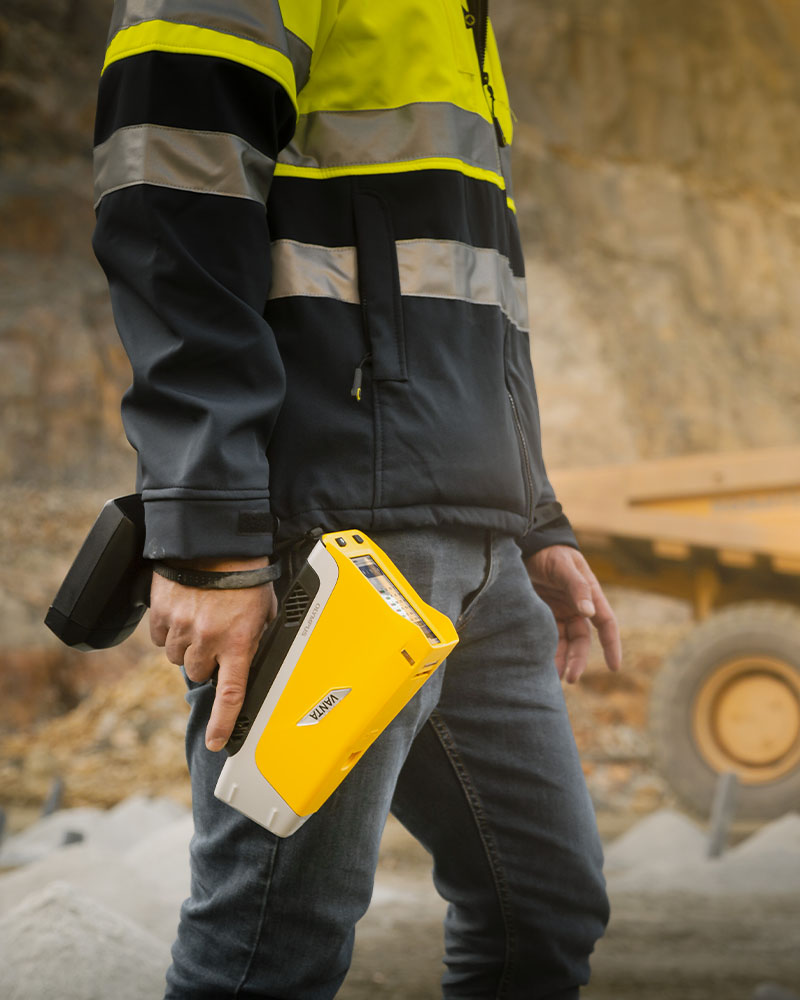
XRF Analyzers. Verify every component through positive material identification and check sulfur content in fuels.
Acoustic Emission. Monitors storage tanks and pressure vessels for active flaws without taking equipment out of service.
Magnetic Particle & Penetrant Testing, Hardness Testers, Videoscopes, Coating Thickness Measurement, Holiday Detectors and Radiation Measurement Systems are also widely used across oil, gas and petrochemical facilities.