
NDT and Asset Integrity in Power Plants
In power generation, the cost of an unplanned outage far exceeds any inspection budget. A ruptured boiler tube, a growing crack in a turbine blade or a leaking heat exchanger means not only repair costs but lost generation and grid obligations. That is why inspection in this industry has evolved from a post-failure diagnostic tool into the core input for planned maintenance and remaining life assessment.
Power generation is not a single technology. Thermal and combined-cycle plants, nuclear facilities, hydroelectric structures, wind and solar farms and geothermal sites each have their own damage mechanisms. What they share is equipment operating under a combination of high temperature, pressure, vibration and corrosive environments. Creep, thermal fatigue, stress corrosion cracking, erosion-driven wall loss and mechanical fatigue are the typical results. On top of these, verifying the efficiency of flue gas cleaning and filtration systems is a separate area that requires regular measurement to keep environmental permits in good standing.
Heat Exchanger and Condenser Tube Inspection
A single plant may contain thousands of heat exchanger tubes, and planned outages are often limited to a few days. Inspection speed therefore translates directly into operational value. Eddy current methods quickly detect wall loss, pitting and cracks using probes pushed through each tube. Different probe technologies are used for ferromagnetic and non-ferromagnetic materials, so the solution can be matched to the tube material.
Weld Inspection for Boilers, Steam Lines and Pressure Equipment
Welds in boiler tubes, main steam lines and pressure vessels are among the most critical areas of any plant. Acceptance depends less on whether a flaw exists than on its size and location, so sizing accuracy is decisive. In difficult materials with high sound scattering, such as austenitic stainless steel and dissimilar metal welds, advanced ultrasonic imaging techniques deliver resolution beyond the limits of conventional ultrasonics. Ultrasonic thickness measurement makes it possible to calculate wall loss rates and predict remaining life.
Turbine, Generator and Wind Blade Inspection
Gas and steam turbines operate where high temperatures meet dynamic loads. Blade roots, rotor shafts and joints are scanned periodically for fatigue cracks. In components that have spent years at high temperature, changes in material properties are tracked with on-site hardness testing. In wind energy, detecting delaminations and bond line defects in glass fiber reinforced blades becomes more critical as blades grow longer.
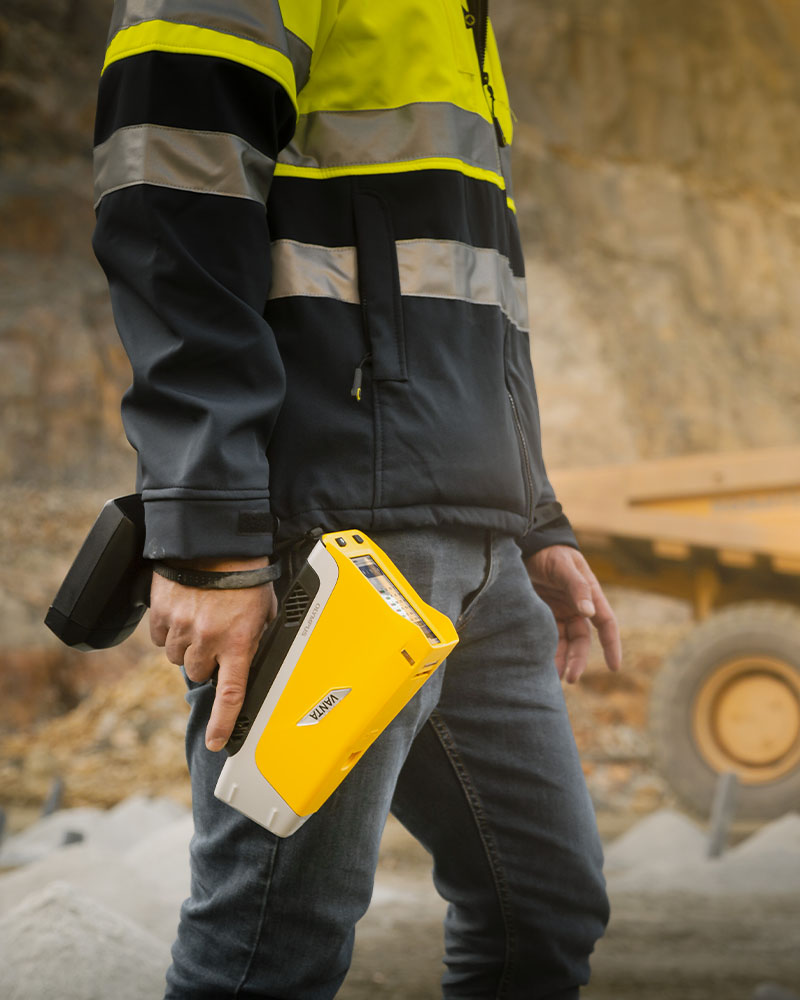
Where access is difficult, visual inspection technology allows turbine and generator internals to be examined without disassembly, one of the most practical ways to cut inspection cost and downtime at the same time. Because installing the wrong alloy in a high-temperature line carries a serious risk of failure, material verification before and after installation is also part of routine practice.
NDT Standards in Power Generation
Inspection follows ASME Boiler and Pressure Vessel Code Sections V and VIII, ASME B31.1 for power piping, EN 12952 for water-tube boilers, EN 13445 for pressure vessels, EN ISO 17640 for ultrasonic weld inspection and ISO 16809 for thickness measurement. Weld quality requirements are defined by EN ISO 3834 and acceptance criteria by EN ISO 5817. For wind turbine blades, the inspection guidelines of certification bodies are decisive.
Common NDT Methods in Power Generation
Eddy Current. Scans thousands of heat exchanger and condenser tubes in a short time, detecting wall loss, pitting and cracks.
Phased Array & TOFD. Detect and size volumetric flaws in boiler, steam line and pressure vessel welds, with advanced imaging techniques delivering high resolution in difficult materials.
Ultrasonic Testing. Monitors wall thickness in boiler tubes and process piping, calculates wall loss rates and assesses the internal structure of composite wind blades.
Hardness Testers. Track material degradation in components operating at high temperature and verify post-weld heat treatment.
Videoscopes. Inspect turbine, generator and boiler internals without disassembly, shortening outages.
Acoustic Emission. Monitors active flaws in pressure vessels and tanks in real time. The whole structure is listened to at once, and only the areas that produce signals are sent for detailed inspection.
Industrial Radiography, Magnetic Particle & Penetrant Testing, XRF Analyzers, Radiation Measurement Systems and Gas Emission Measurement Systems are also widely used in power plants.