
The Purpose of Analysis in Environmental and Product Compliance
Environmental and product compliance differ from other applications in one key respect: the goal is not to find a flaw but to prove whether a limit value has been exceeded. The result is more than a technical decision; it is evidence that a legal obligation has been met. That is why traceability and reportability matter as much as the measurement itself.
The field has two main branches. The first is controlling restricted substances in products placed on the market. The second is monitoring environmental contamination and industrial emissions. Neither is optional for manufacturers, as both are conditions for market access and operating permits. The cost of non-compliance can range from a product recall to a shutdown of operations.
RoHS and Hazardous Substance Screening
In electrical and electronic products, lead, cadmium, mercury, total chromium as an indicator of hexavalent chromium, and total bromine as an indicator of brominated flame retardants can all be screened without taking the product apart. This screening is the first tier of the compliance process: parts well below the limits need no further testing, while suspect parts are sent for detailed lab analysis. The result is a significant drop in the number of samples sent out and in total compliance cost.
The same approach applies to heavy metal control in packaging, consumer goods, toys and food contact materials. Fast screening at goods-in catches non-compliant material before it enters production, avoiding the far higher cost of finding the problem in the finished product.
Stack Gas and Particulate Emission Measurement
Reporting total particulate mass as a single number can be misleading from a health perspective. The real risk comes from fine and ultrafine fractions that penetrate deep into the respiratory tract. Separating particles by aerodynamic diameter to reveal their size distribution makes this detail visible, so that both regulatory compliance and actual environmental impact can be assessed correctly.
Real-time systems produce instantaneous concentration data without waiting for mass to accumulate. This makes it possible to test emission control systems such as filters and electrostatic precipitators under varying load conditions, pinpoint the operating point where efficiency starts to drop and base maintenance decisions on measurement. In engine and combustion system development, the same method shows the effect of design changes on emissions directly.
Soil Contamination and Environmental Monitoring
Multi-point elemental measurements taken on site map the boundaries of heavy metal contamination in soil and sediment and pinpoint where excavation is needed. Knowing precisely where contamination ends reduces both unnecessary excavation volume and disposal costs. Sending fewer samples to the lab also cuts the site investigation budget directly.
Fuel Quality and Radiation Monitoring
Sulfur content in fuel affects both the lifetime of vehicle emission control systems and air quality. Fast elemental analysis allows compliance with regulatory limits to be checked in the field. In facilities that hold radiation sources or process radioactive materials, area and personal dosimetry is a mandatory monitoring activity for both worker health and environmental safety.
Environmental and Compliance Standards
For product compliance, the IEC 62321 series defines test methods and EN IEC 63000 sets technical documentation requirements. Substance restrictions are governed by the RoHS Directive, and chemical registration and evaluation by REACH and its Turkish counterpart KKDİK. Environmental monitoring follows Turkey's Industrial Air Pollution Control Regulation and soil contamination rules. Radiation safety falls under the regulations of the Nuclear Regulatory Authority (NDK).
Common Analysis Methods in Environmental and RoHS Compliance
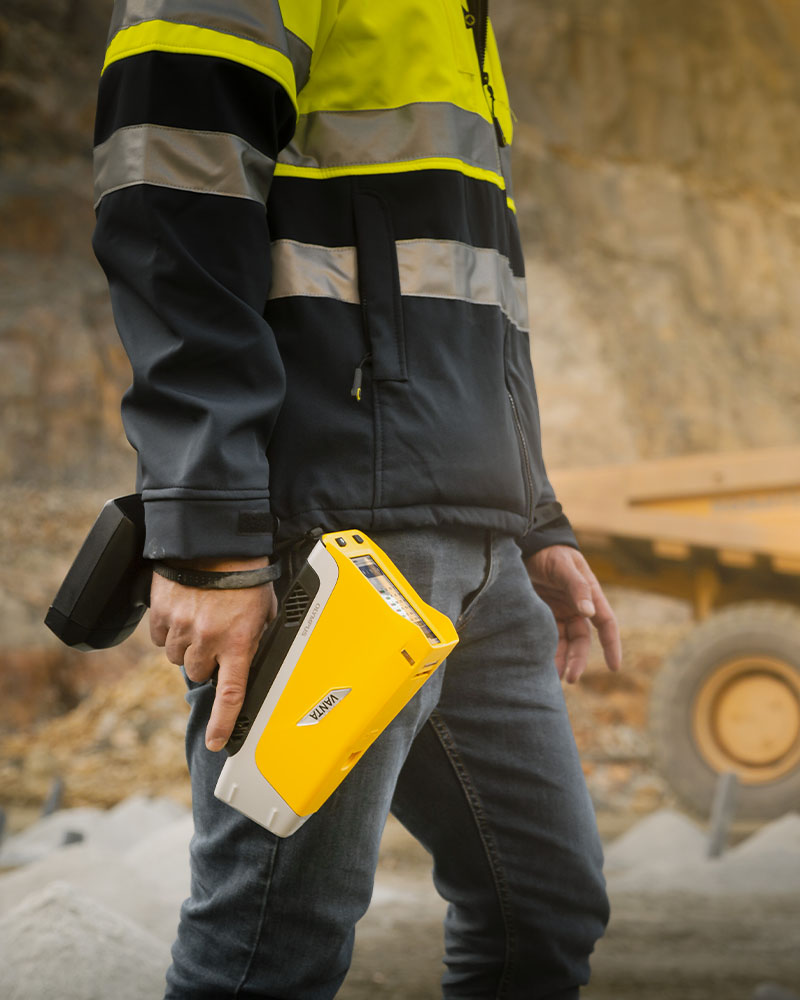
XRF Analyzers. Screen electrical and electronic products for restricted substances without disassembly, map soil and sediment contamination and check sulfur content in fuels.
Gas Emission Measurement Systems. Measure particulate emissions from stacks and exhausts together with their size distribution, producing real-time data in efficiency tests of filters and emission control systems.
Radiation Measurement Systems. Provide area and personal dosimetry and monitor environmental radiation levels in facilities that hold radiation sources.
LIBS Spectrometers. Offer complementary analysis for fast detection of light elements and components that are hard to measure with conventional methods.
Optical Emission (OES) Spectrometers. Verify hazardous element content in metallic materials with high accuracy and confirm field measurements.
Scanning Electron Microscopes (SEM). Examine particle morphology and element distribution to help identify the source of contamination.
Sample Preparation Equipment and Coating Thickness Measurement are also used in environmental analysis and product compliance applications.