
Why Materials Analysis Matters in Metals and Foundry Production
The metals and foundry industry sits at the very start of the industrial supply chain. The chemistry, internal structure and mechanical properties of the material produced here set the performance ceiling for every product made from it. No downstream check can rescue a part cast with the wrong chemistry. That is why quality control in this industry is as much about verifying composition as it is about finding flaws.
The second driver is time. Molten metal can only be held in the furnace for so long, and its chemistry must be verified, and corrected if needed, before pouring. Analysis time is therefore not only a quality issue but a direct factor in energy cost and productivity. Results available at the furnace within minutes allow alloy additions to be made at exactly the right moment.
Spectrometric Analysis in Steel Plants and Foundries
Optical emission spectrometry determines the full chemical composition of molten and solid metal with high accuracy. Its ability to measure light elements such as carbon, sulfur, phosphorus and nitrogen at low levels, all of which directly affect mechanical properties, places it at the heart of every foundry and steel plant lab. XRF technology adds a complementary layer, providing fast alloy verification in the stockyard and at shipping without any sample preparation.
Microstructural examination reveals the root cause of problems that bulk measurements cannot explain. Grain boundaries, inclusions, second-phase particles and fracture surfaces provide decisive data in failure analysis and process development. An often overlooked fact, and one that directly affects results, is that analytical accuracy starts with sample preparation.
Internal and Surface Flaw Inspection of Castings
Porosity, shrinkage, hot tears, cold shuts and slag inclusions are the most common casting defects. Radiography images these flaws and allows them to be graded against standard reference radiographs. Ultrasonic testing detects internal cracks, laminations and voids in forgings, heavy-section castings and rolled products. For surface and surface-breaking defects, magnetic particle and liquid penetrant methods offer a fast and economical solution.
Heat Treatment Verification and Material Certification
Hardness testing confirms that mechanical properties after heat treatment meet specification. On large parts that cannot be moved, portable methods eliminate the need to cut test samples, saving both cost and time. The inspection certificates issued at shipment underpin traceability and the customer's acceptance of the material.
Standards in the Metals and Foundry Industry
Spectrometric analysis follows material-specific standards such as ASTM E415, E1086 and E1251. Ultrasonic inspection of castings is covered by EN 12680, magnetic particle inspection by EN 1369 and radiographic inspection by EN 12681. Hardness testing is defined by ISO 6506, ISO 6507 and ISO 6508. The type and binding nature of inspection documents issued at shipment are set by EN 10204.
Common Analysis and Inspection Methods in Metals and Foundry
Optical Emission (OES) Spectrometers. Determine the full chemical composition of molten and solid metal with high accuracy. Precise measurement of light elements such as carbon, sulfur and phosphorus enables corrective decisions at the furnace.
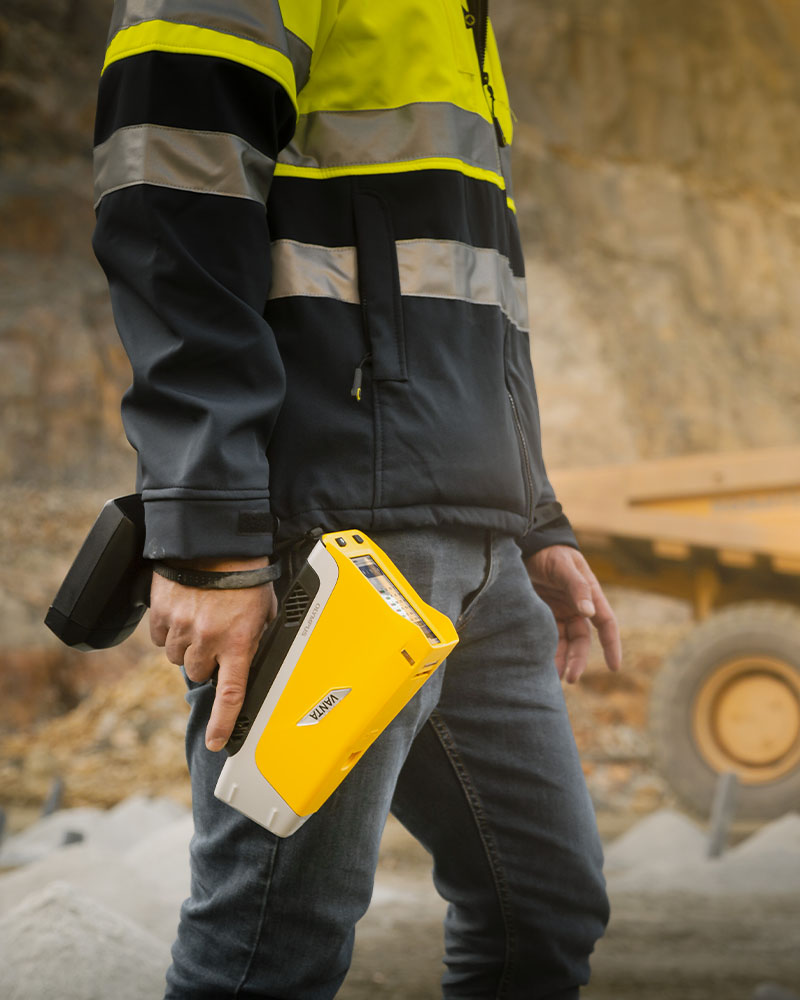
XRF Analyzers. Verify alloys in seconds in the stockyard and at shipping without sample preparation, adding a practical safeguard against material mix-ups.
Industrial Radiography. Images porosity, shrinkage and inclusions in castings and grades them against reference radiographs.
Ultrasonic Testing. Detects internal cracks, laminations and voids in forgings, heavy castings and rolled products, and measures thickness.
Magnetic Particle & Penetrant Testing. Find cracks, laps and cold shuts on casting and forging surfaces quickly and economically.
Hardness Testers. Verify mechanical properties after heat treatment. Portable methods eliminate sample cutting on large parts.
Scanning Electron Microscopes (SEM), LIBS Spectrometers, Phased Array & TOFD, Sample Preparation Equipment and Radiation Measurement Systems are also widely used in the metals and foundry industry.