Analytical
Portable XRF Analysis Instruments
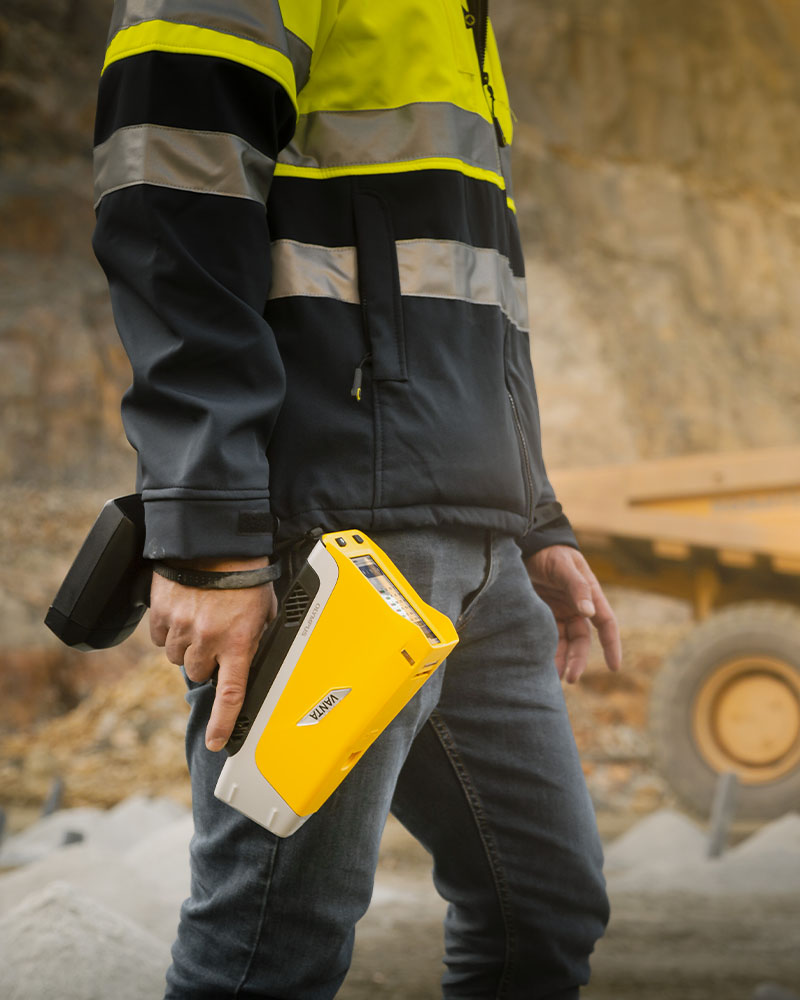
XRF Analysers: Portable, Non-Destructive, and Innovative Solution XRF (X-Ray Fluorescence) Analysers are portable, non-destructive analysers that represent the state-of-the-art in elemental analysis. The unique technology of XRF instruments has a wide range of applications and is an indispensable part of both scientific research and industrial processes. What is XRF? XRF, X-Ray Fluorescence, is a technique for the rapid and non-destructive analysis of the chemical composition of a material. XRF analysers are based on the principle that each element of the material under study creates a unique ‘signature’ or ‘fingerprint’. By identifying these ‘signatures’, XRF instruments perform a complete elemental analysis of the material. An XRF analyser sends a beam of X-rays through the material. This beam interacts with the atoms of the material and causes these atoms to emit fluorescent (i.e. X-ray) photons. These emitted photons are analysed to determine the type and amount of elements present in the material. What are the Technical Specifications of Portable XRF Analysers? Portable XRF analysers offer an easily portable and user-friendly solution for professionals working in the field. The devices usually work in integration with a computer or tablet, so that the results of the analysis are displayed and recorded quickly and efficiently. According to the technical characteristics of XRF instruments, they can detect even very low levels of elemental concentrations. They are also capable of analysing a very wide range of elements (most of the periodic table). What are the Advantages of XRF Analysers? The advantages offered by Portable XRF Analysers can be evaluated in a wide range. Perhaps the most obvious is the non-destructive analysis capability of XRF analysers. This feature offers the capacity to gain valuable information about the material being analysed without altering or damaging it. This can be particularly valuable when analysing valuable or protected materials. Speed is another distinct advantage of XRF technology. XRF analysers deliver results in just a few seconds, enabling users to make quick and informed decisions. This can improve the efficiency of industrial processes and help prevent potential problems. Also noteworthy is the ease of use and portability of XRF analysers. These instruments can be used without requiring complex training, saving users time and resources. Portable instruments can be used virtually anywhere, making them suitable for a number of different applications. Finally, XRF instruments are known for having a wide range of elements that they can analyse. This allows them to be used in a variety of industries and scientific research, as these instruments can analyse most elements in the periodic table. This makes XRF analysers an ideal tool for the analysis of complex materials and samples. The combination of all these features makes XRF Analysers the ideal solution for the effective and efficient conduct of both scientific research and industrial processes. Revolutionising the field of chemical analysis, these instruments will continue to be an indispensable part of both scientific research and industrial processes.
All ProductsLIBS Spectrometer
Laser-Induced Breakdown Spectroscopy (LIBS) is a technology that provides rapid and precise elemental analysis across a wide range of applications. The LIBS spectrometer offers a portable solution capable of performing on-site, non-destructive operations. What is a LIBS Spectrometer and How Does It Work? A LIBS spectrometer is a sophisticated device used to analyze the chemical composition of a material quickly and without causing damage. LIBS operates on the principle of directing a laser beam onto a sample, which creates a small plasma explosion on its surface. During this explosion, atoms and ions are excited and then return to their lower energy levels by emitting light at specific wavelengths. By analyzing this emitted light spectrally, the chemical composition of the target material can be determined. Technical Features of a LIBS Spectrometer LIBS spectrometers are typically handheld and capable of performing real-time analysis. These devices measure the emission spectrum over a wide range of wavelengths, enabling the detection of numerous elements. LIBS can detect even trace concentrations of elements, offering highly sensitive measurements. Advantages of LIBS Spectrometers LIBS spectrometers provide several key advantages. One of the most notable features is their non-destructive analysis capability. They allow the determination of a material’s chemical composition without compromising its structural integrity or destroying the sample. Speed is another major advantage of LIBS technology. In most cases, analysis results are obtained instantly, enabling users to make quick and informed decisions. Additionally, LIBS spectrometers are easy to use and typically come in a portable form factor, allowing users to perform analyses outside traditional laboratory settings. Finally, LIBS instruments can analyze a wide range of elements. By using broad-spectrum lasers, they can detect most elements in the periodic table, making them suitable for a variety of applications. In summary, the LIBS spectrometer stands out as a powerful tool for a wide range of applications thanks to its ease of use, fast and accurate analyses, and broad elemental detection capabilities. Ideal for both scientific and industrial environments, this innovative device offers a perfect solution for determining the chemical composition of materials on-site, non-destructively, and rapidly. With its unique capabilities and features, the LIBS spectrometer is a preferred instrument wherever elemental analysis is required.
All ProductsOptical Emission Spectrometers
All ProductsScanning Electron Microscope (SEM)
What is a Scanning Electron Microscope (SEM)? Scanning Electron Microscopes (SEMs) are advanced imaging devices that allow for high-resolution and detailed examination of material surfaces. By using an electron beam to scan the surface structure, SEMs are widely utilized in various fields such as materials science, metallurgy, biotechnology, nanotechnology, the semiconductor industry, and forensic analysis. What are Advantages of SEM Microscopes? SEM microscopes offer significantly higher magnification levels and depth perception compared to traditional optical microscopes. They provide micro- and nanometer-level information about surface morphology, topography, crack analysis, coating thickness, and more. This makes them essential tools in quality control, R&D activities, and academic research. Who Are SEMs Suitable For? Scanning Electron Microscopes are indispensable for universities, research centers, laboratories, quality control departments, and industrial manufacturing companies. When used with proper sample preparation techniques, SEMs are among the most reliable solutions for in-depth material characterization. Why Choose This Category? The SEM models featured in this category stand out with their user-friendly interfaces, high-resolution imaging capabilities, and advanced analysis software. Here, you can find the most suitable SEM devices for your specific needs, along with detailed information on technical features such as magnification ranges, detector options, and sample size compatibility.
All Products